When your Network & IT future depends on the details, every decision matters.
With us, your in good hands. Call US today @ 647-945-3510

Info@GTANetworkCabling.ca | 647-945-3510

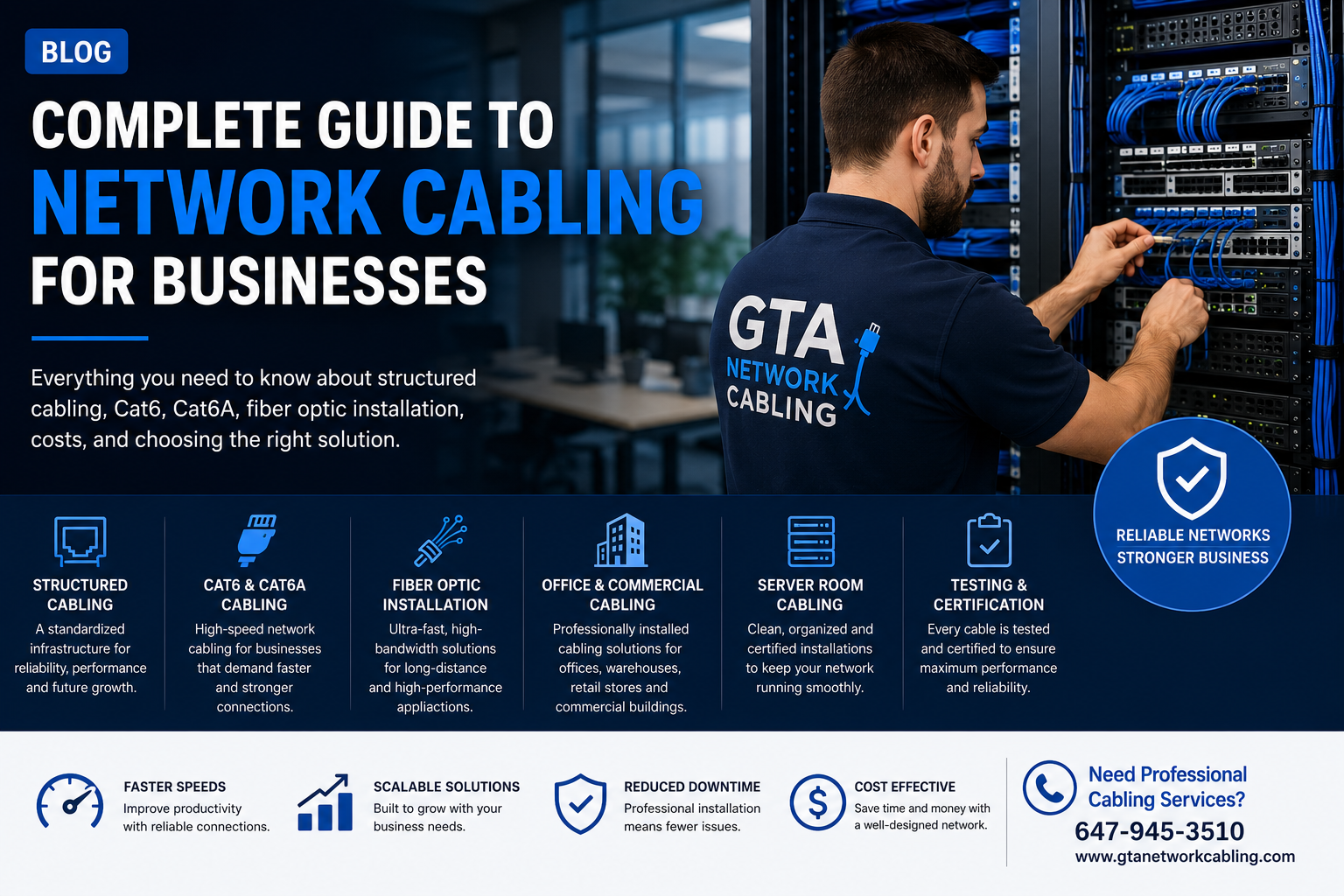
Why Professional Network Cabling Is Critical for Business Success
Modern businesses depend on reliable technology to communicate, collaborate, and serve customers efficiently. Every computer, phone, wireless access point, security camera, server, and cloud application relies on a stable network infrastructure. Therefore, professional network cabling plays a critical role in business productivity and long-term growth.
Whether you operate a small office, a warehouse, a retail location, or a large commercial facility, the quality of your cabling infrastructure directly affects network performance. A poorly designed network often creates bottlenecks, connectivity issues, and unnecessary downtime. In contrast, professionally installed network cabling provides faster speeds, improved reliability, and easier scalability.
Businesses throughout Toronto and the Greater Toronto Area increasingly invest in structured cabling solutions to support growing technology demands and future expansion.
Network cabling refers to the physical infrastructure that connects devices throughout a business environment. This infrastructure allows computers, servers, printers, VoIP phone systems, wireless access points, and security systems to communicate with one another.
A complete network cabling system may include:
Together, these components create a reliable framework that supports business operations and data communication.
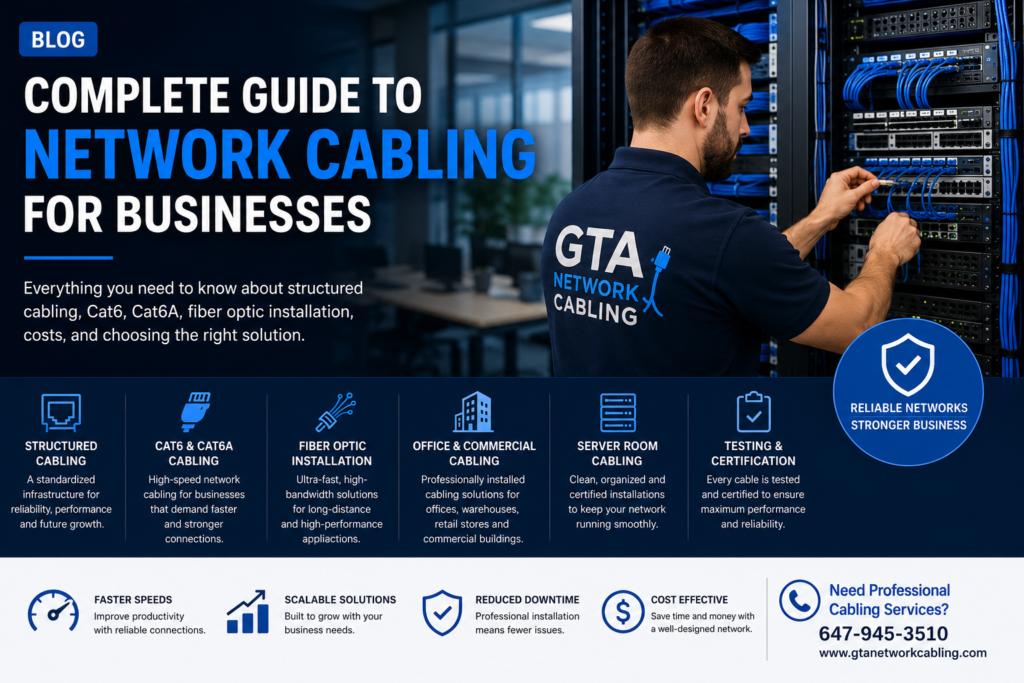
Structured cabling provides a standardized approach to network infrastructure design. Instead of installing cables randomly as needs arise, structured cabling organizes all network connections into a centralized and scalable system.
Businesses benefit from structured cabling because it:
As technology requirements continue to evolve, structured cabling helps businesses adapt without major infrastructure changes.
One of the most common questions businesses ask involves selecting the right network cable. Understanding the differences between available options helps organizations make informed decisions.
Cat5e remains a common option for basic networking applications. It supports Gigabit Ethernet and works well in smaller environments with moderate bandwidth requirements.
Cat6 cabling provides higher performance and better protection against interference. Many businesses choose Cat6 because it supports faster data transmission and modern network applications.
Cat6A represents the preferred choice for organizations seeking maximum performance and future scalability. It supports 10 Gigabit Ethernet over longer distances and delivers superior bandwidth capabilities.
Consequently, many new office installations and network upgrades utilize Cat6A infrastructure.
Fiber optic cabling uses light signals rather than electrical signals to transmit data. This technology provides significant advantages for businesses that require high-speed connectivity and long-distance communication.
Benefits of fiber optic installation include:
Many organizations install fiber optic cabling between server rooms, network closets, buildings, and data centers to support demanding applications.
Technology continues to advance rapidly. Cloud computing, video conferencing, VoIP phone systems, artificial intelligence, and large file transfers place increasing demands on business networks.
Organizations often upgrade their cabling infrastructure to:
A modern network infrastructure provides the flexibility needed to support evolving business requirements.
Successful office network cabling projects require careful planning and professional installation. Businesses should consider both current needs and future expansion when designing their infrastructure.
Best practices include:
These practices improve long-term reliability while reducing future maintenance costs.
Many business owners search for “network cabling installation cost” before starting a project. The final price depends on several factors.
Common factors include:
Because every project differs, professional site assessments provide the most accurate estimates.
Hiring an experienced network cabling contractor helps ensure your infrastructure performs reliably for years. Professional installers understand industry standards, proper cable routing techniques, testing procedures, and future scalability requirements.
A qualified network cabling company can help with:
Most importantly, professional installation protects your investment while maximizing network performance.
Technology will continue evolving over the coming years. Businesses that invest in high-quality network infrastructure today position themselves for future success.
A professionally designed cabling system supports faster communication, improved productivity, better customer service, and long-term scalability. Whether you require structured cabling, Cat6 installation, Cat6A cabling, fiber optic services, or a complete office network upgrade, choosing the right infrastructure creates lasting value.
GTA Network Cabling provides professional structured cabling, Cat6 cabling, Cat6A cabling, fiber optic installation, office network cabling, warehouse cabling, server room cabling, Business VoIP Phone Systems, Business IT Support, and Business System Backup solutions throughout Toronto and the Greater Toronto Area.
Call 647-945-3510 today for a free consultation and discover how professional network cabling can improve your business performance.